
Learning hub
How to clean and care for your screens
Ten minutes, a bucket of warm water and a soft cloth. No special products, no pressure washer, and your warranty stays intact.
Free measure and quote. Licensed QBCC 15340369.
Printable cleaning guides
One page each, matched to how hard your environment is on a screen. Stick it inside the laundry cupboard.
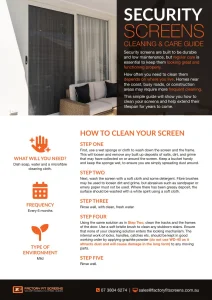
Mild environment
Rural and inland, away from industry and heavy traffic. Clean every six months.
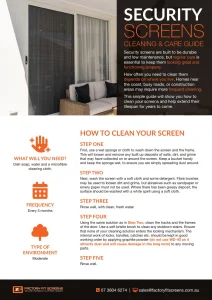
Moderate environment
Most of Brisbane, Logan, Ipswich and the inland Gold Coast. Clean every three months.
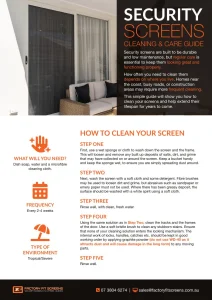
Severe environment
Beachside and canal suburbs, bayside Brisbane and homes near industrial estates. Clean every two to four weeks.
Overview
Clean security screens with warm water and a little dishwashing liquid on a soft cloth or sponge, rinse with clean water and dry. Do it every six months if you're inland, every three months in the suburbs, and every two to four weeks near the coast. Never use abrasive cleaners or a pressure washer. Regular cleaning is a condition of your warranty.
What you need
Avoid any product labelled "heavy duty", "cream cleanser" or "scourer".
- A bucket of warm water
- A small squirt of dishwashing liquid
- A soft cloth, sponge or microfibre cloth
- A soft-bristle brush or a vacuum with the brush head on low suction, for loose dust
- A second clean cloth or a hose on gentle flow, for rinsing
- A towel for drying
How to clean security screens, step by step
Open up
Open the door or window so you can reach both sides of the mesh. You don't need to take the door off its hinges for a regular clean. For a yearly deep clean, laying a door flat makes it easier; if you'd rather not lift it, we can remove and refit it for you.
Dust first
Go over the mesh with a soft brush, or a vacuum on low suction with the brush head. Be gentle: you're lifting dust and cobwebs, not scrubbing. Pushing hard can dent or stretch the mesh.
Wash
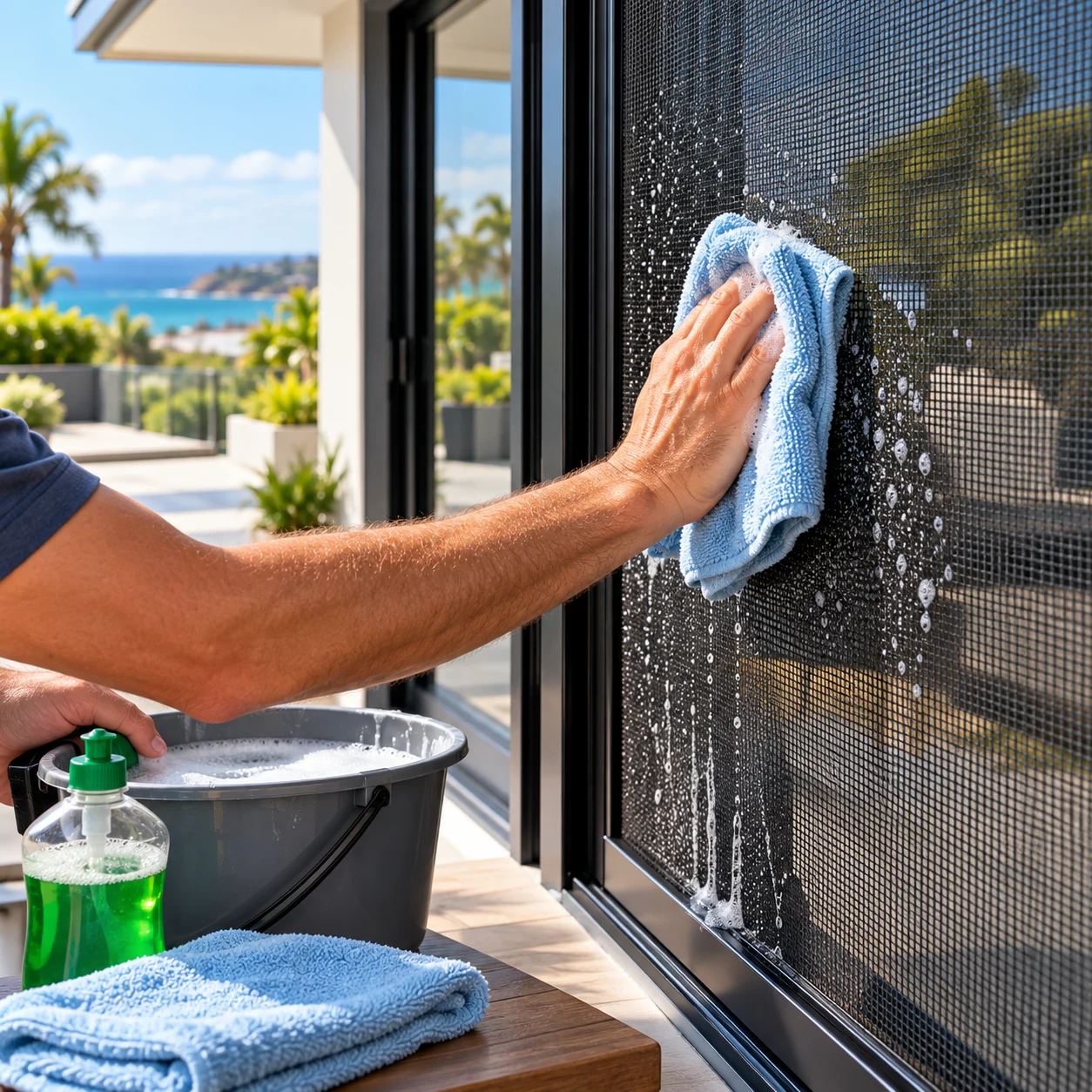
Mix a little dishwashing liquid into warm water. Wipe the mesh and the frame with a soft cloth or sponge, top to bottom, both sides. Rinse the cloth as it gets dirty. Don't use anything abrasive; it scratches the powder coat and anodised finish.
Rinse
Go over everything with clean water (a fresh cloth or a hose on a gentle flow). Soap left on the surface dulls and, over time, breaks down the finish, so rinse properly.
Dry
Pat the frame dry with a towel and let the mesh air dry. Moisture trapped in corners and tracks is what starts corrosion, so don't close a wet door on a still, humid day if you can help it.
Check the locks and tracks
While you're there, run the snib and the key, look at the wheels on a sliding door and clear grit from the track. If anything is stiff, see the locks section below.
Small scratches on a powder-coated frame can sometimes be softened with a gentle car polish; use it sparingly so you don't rub through the coating. Stubborn old stains sometimes lift with a quality car wash product.
How often, by where you live
The closer you are to salt air or industry, the more often your screens need a wash. These are maximum intervals; a quick rinse whenever you notice grime is always fine.
| Where you live | Examples | Clean at least |
|---|---|---|
| Mild: rural, inland, away from industry and heavy traffic | Acreage in the Scenic Rim or Logan's semi-rural fringe | Every 6 months |
| Moderate: suburban, inland, away from heavy industry | Most of Brisbane, Logan, Ipswich and the inland Gold Coast | Every 3 months |
| Severe: coastal or industrial, roughly within 15 km of the east coast or near heavy industry | Gold Coast beachside and canal suburbs, bayside Brisbane, homes near Yatala's industrial estates | Every 2 to 4 weeks |
These intervals are general guidance. Some homes (right on the sand, or downwind of a busy road) need more. If you're not sure which row you're in, tell us your street at the measure and we'll say.
Cleaning fly screens
Fly screen mesh is lighter than security mesh, so go gentler. A slightly damp microfibre cloth is enough: start at the top and wipe side to side, working down. Rinse the cloth and go again if it's dusty. For a proper clean, a bucket of warm soapy water and a soft cloth, then a rinse. Once a year, taking the screens out and washing them flat gets the frames and tracks too. If you've got a lot of windows, do a room at a time rather than the whole house in one go.
Looking after locks and hardware
A triple lock has three bolts on one rod. A spray of silicone every six months (every three months near the coast or industry) keeps all three moving.
Open the door.
Unlock with the snib so the top and bottom bolts pull back.
Spray silicone into the gap at each lock point, top and bottom.
Turn the handle and spray the centre lock.
Work the snib back and forth a few times to spread it.
Use a dry silicone spray, not an oil-based lubricant; oil holds grit. Sliding doors: clear the track and check the wheels while you're there. Digital locks: wipe the keypad with a damp cloth and change the batteries when it warns you.
Pets and screens
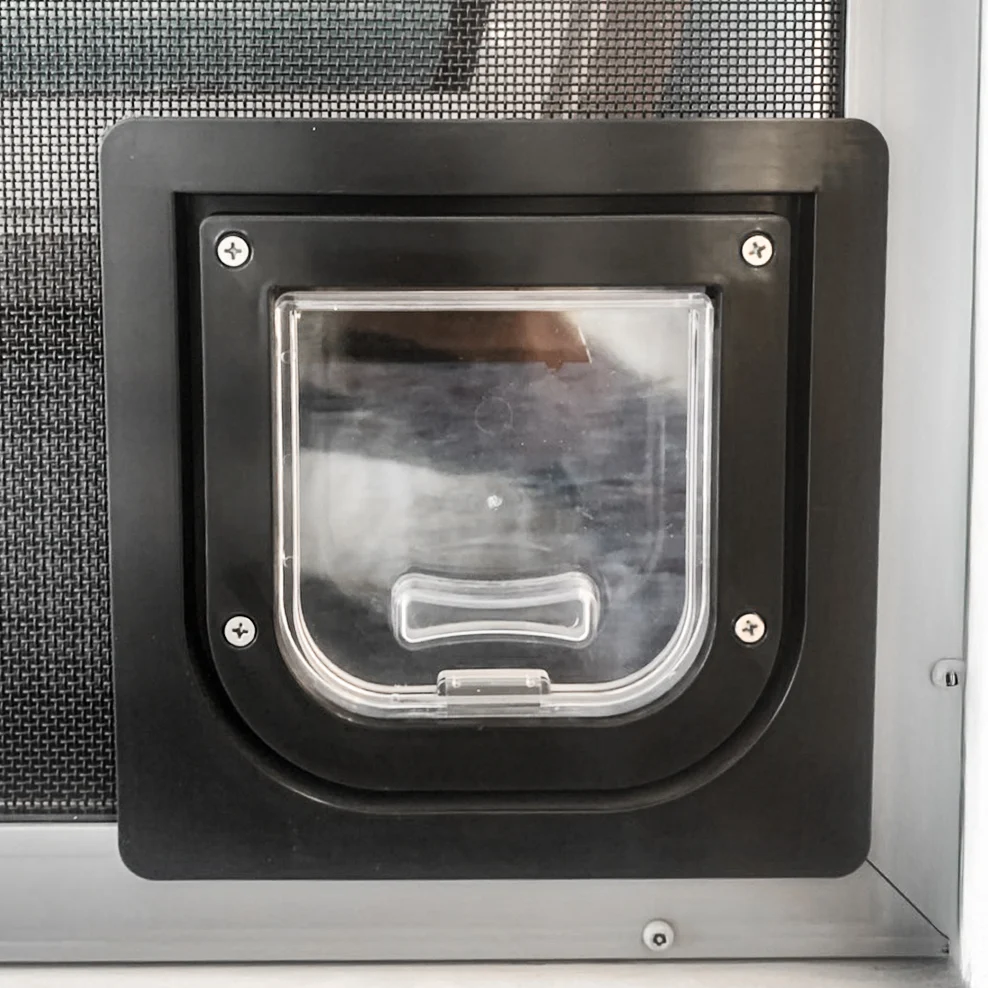
Standard fly mesh is easily damaged by a dog's front paws. If your screens are already scratched, Paw Proof mesh (0.64 mm, 7 year warranty on the comparison sheet) is the usual fix on a fly screen, and a stainless mesh screen is the tougher answer on a door a big dog uses all day. A pet door fitted into the screen stops the leaning. Our full pet guide covers training, mesh choice and what's worth replacing.
Blinds and shutters
Care instructions for blinds and shutters come with your order; if you've lost yours, call us and we'll send them.
What not to do
- No abrasive cleaners, cream cleansers, scourers or steel wool
- No bleach, solvents or "heavy duty" sprays
- No pressure washers
- No scrubbing hard on the mesh
- No leaving soap on the surface
- No oil-based lubricant in the locks
- No closing a wet door in a track that can't drain
Why it matters for your warranty
Our terms don't cover damage from a failure to maintain the product, and near the coast that means salt left on the finish. Clean on the intervals above and the warranty stays valid. Keep your invoice and a couple of photos of the screens; both help if you ever need to claim.
Care and cleaning questions
Replacing worn screens
If the mesh is torn, the frame is pitted or the lock has failed, get a guide price for replacements in two minutes.